Mirchi Bomb
As people become more health-conscious, superfoods are becoming an essential part of daily diets. Among them, chia seeds and sabja seeds (also known as basil or tukmaria seeds) have gained a lot of popularity for their impressive health benefits. However, due to their similar appearance, many people find it tricky to tell them apart.
Let’s explore the key differences between these two nutritional powerhouses—including their benefits, nutritional profiles, and how best to include them in your meals.
Chia Seeds vs Sabja Seeds: What Sets Them Apart?
| Aspect | Chia Seeds | Sabja Seeds |
| Botanical Name | Salvia hispanica | Ocimum basilicum |
| Common Names | Chia | Basil seeds, Tukmaria |
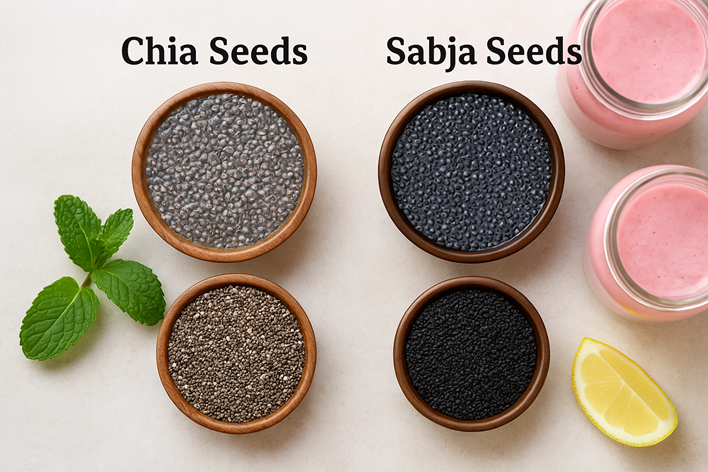
| Appearance | Oval, black/white | Round, jet black |
| Origin | Central & South Mexico, Guatemala | India & Southeast Asia |
| Taste | Mild, nutty | Mildly sweet, with a hint of basil |
| Nutrient-Rich In | Omega-3s, fibre, protein, calcium | Iron, fibre, protein, antioxidants |
| Water Absorption | 10–12x their weight in water | 8–10x their weight in water |
| Culinary Use | Smoothies, salads, baking, puddings | Drinks, desserts, cooling beverages |
| Health Benefits | Heart health, energy, digestion, weight loss | Digestion, body cooling, blood sugar control |
| Soaking Time | 30 mins – 2 hours | 10–15 minutes |
| How They’re Used | Can be eaten raw or soaked | Always soaked before use |
| Shelf Life | Long if stored well | Shorter, best consumed fresh |
| Precautions | Can cause bloating if not hydrated enough | May cause choking if consumed dry |
Chia Seeds at a Glance
Native to Mexico and Guatemala, chia seeds come from the plant Salvia hispanica. Once used by Aztec warriors for energy and endurance, chia seeds are now cultivated worldwide—including in Argentina, Peru, and Australia.
These seeds are packed with essential nutrients and are even used in cosmetics for their oil content. Their high fibre, protein, and omega-3 levels make them a great addition to any healthy diet.
Nutritional Value (per 100g):
- Calories: 486 kcal
- Fibre: 34.4 g
- Protein: 16.5 g
- Fats: 30.7 g
- Calcium: 631 mg
- Iron: 7.72 mg
- Magnesium: 335 mg
- Omega-3: High content
- Also rich in B vitamins and antioxidants.
Benefits:
- Lowers blood pressure & cholesterol
- Supports digestive health
- Helps manage weight
- Reduces inflammation & risk of chronic diseases
- Improves mood and blood sugar levels
Sabja Seeds in Focus
Sabja seeds come from the sweet basil plant, commonly used in Indian households. Though tiny, these black seeds are rich in nutrients and traditionally used in cooling summer drinks like falooda or nimbu pani. Unlike holy basil (tulsi), sabja comes from a different variety better known for culinary use.
Nutritional Value (per 13g / 1 tbsp):
- Calories: 60
- Fats: 2.5 g
- Protein: 2 g
- Carbs: 7 g
- Omega-3: 1.24 g
- Also provides calcium, iron, magnesium, polyphenols, and flavonoids.
Benefits:
- Naturally cools the body
- Controls blood sugar
- Aids digestion and relieves acidity
- Promotes weight loss and bowel regularity
- Reduces inflammation and cholesterol
- Good for heart health
Key Differences in Look & Texture
- Colour: Chia seeds can be black, white, or grey—never completely black. Sabja seeds are always jet black.
- Texture After Soaking: Chia seeds take longer to swell and form a gel. Sabja seeds swell quickly and form a thicker gel-like layer.
- Taste: Chia seeds are neutral and blend into any dish. Sabja seeds have a slight basil flavour that complements beverages and desserts.
- Use in Meals: Chia can be eaten dry or soaked. Sabja must always be soaked before consuming.
Final Thoughts
Both chia and sabja seeds bring something special to the table. If you’re looking for long-lasting energy and a nutrient-dense superfood, chia is your go-to. But if you want something cooling, quick to prepare, and great for digestion, sabja seeds are ideal.
Whichever seed you choose, you’re adding a healthy boost to your diet!
Stay updated with the latest in wellness and healthcare—explore Health Mirchi Bomb @ mirchibomb.com!


